
%
of the 105 countries and territories with coral reefs have received training
managers and practitioners have participated in an online training, webinar, or in-person workshop
%
of managers surveyed by the Network state that they have learned or applied effective management practices at their sites
Where We Work
Since 2005, the Reef Resilience Network has served as a global leader in strengthening the capacity of marine managers to effectively manage, protect, and restore coral reefs and critical marine areas around the world. To achieve this, we connect marine managers and practitioners with peers, experts, and the latest science and strategies, and provide online and hands-on training and implementation support.
Our Approach
The Network is a partnership led by The Nature Conservancy that is comprised of more than 11,000 active members, and supported by dozens of partners and TNC staff, as well as 450 global experts who serve as trainers, advisors, and content reviewers. To strengthen management capacity, the Network:
- Synthesizes and shares the latest science to accelerate action and scale effective management strategies.
- Connects managers globally with peers and experts to share resources and mobilize solutions for improved management.
- Provides training and expert mentorship to pilot new approaches and launch marine conservation and restoration projects.
To serve a global audience, the Network Hub (reefresilience.org) features:
- Courses to build knowledge and skills on key topics for reef resilience and management effectiveness of MPAs
- Toolkits summarizing fundamentals for managers on a variety of topics important to reef management
- A regularly updated database of case studies from around the world highlighting management strategies
- Summaries of new science publications for our open-access library
- interactive webinars to connect managers with experts and peers to learn the latest science and strategies
- Reef Exchanges, a podcast featuring short conversations with experts and managers on a variety of reef management topics
Our Accomplishments
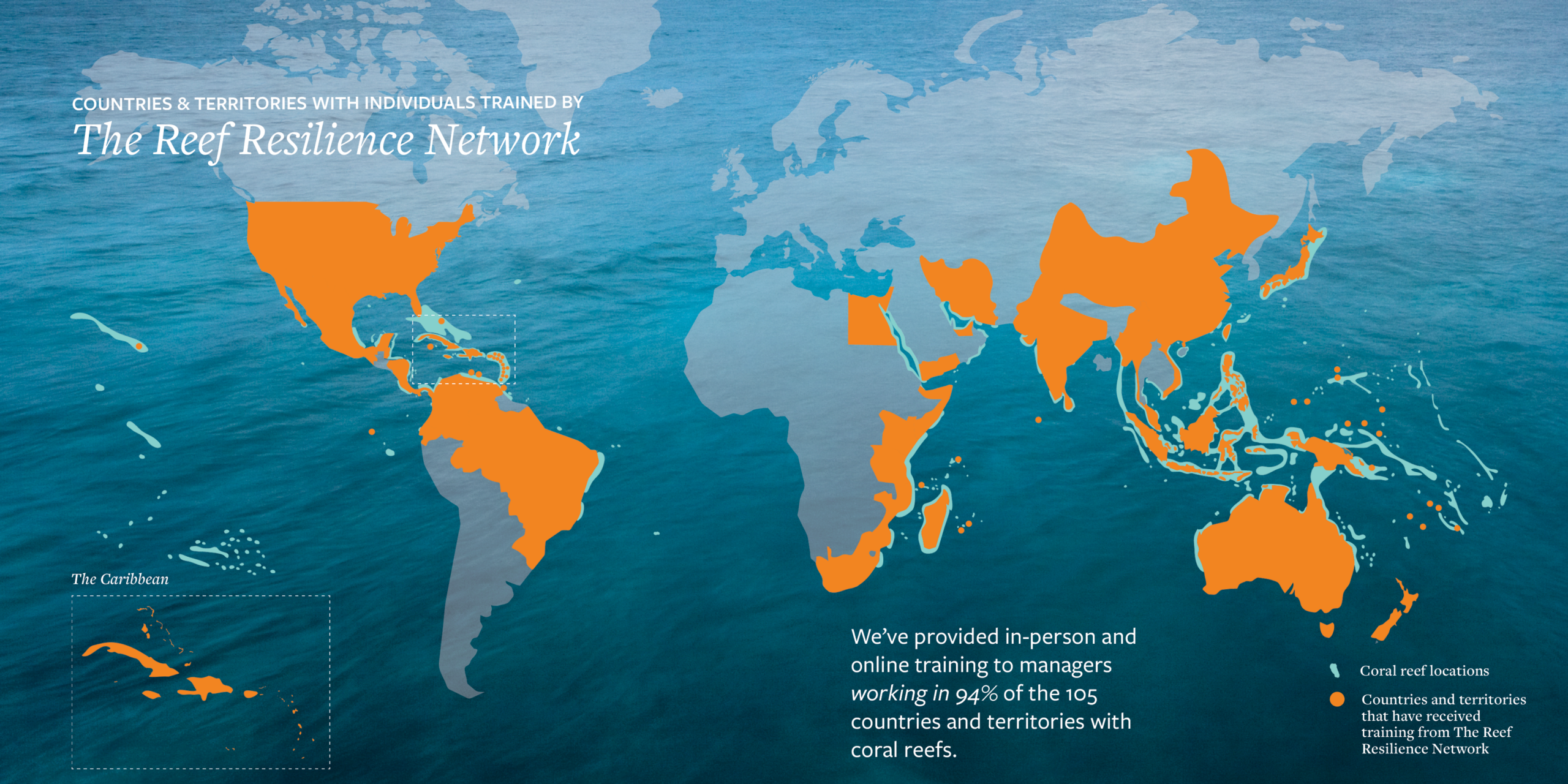
More than 61,000 managers and practitioners from 94% of the 105 countries and territories with coral reefs have participated in Network online or in-person trainings. Our reach stretches even further through our train-the-trainer model and online activities—more than 4.5 million people have visited the Network Hub, reefresilience.org, to access the latest science and management strategies. The result is a better informed and networked cohort of marine resource managers implementing effective management actions across the globe.
Key highlights of our work include:
- Launched new or updated self-paced online courses and hosted mentored versions of the courses. There are currently nine self-paced online courses developed in collaboration with NOAA CRCP and other partners. Every two years, the Network strives to host a month-long mentored version of each course to provide direct, virtual support to managers as they learn course content and apply it to their management work. In 2025, the Network hosted two mentored courses, building skills of more than 1000 managers and practitioners on reef restoration and management effectiveness of MPAs. Access to these learning opportunities were expanded this year with lessons available in Arabic, Bahasa Indonesia, English, French, and Spanish.
- Developed and released a robust collection of resources on Climate-Smart management planning, climate adaptation, MPA finance, MPA enforcement, management effectiveness for MPAs, coral bleaching, wastewater pollution, sustainable livelihoods, and reef restoration, including new tools and frameworks, 19 online toolkits, 93 case studies, and 238 article summaries.
- Connected global managers and practitioners to peers and leading experts in coral-related fields through hundreds of e-newsletters, 110 interactive webinars, and 11 podcast episodes on hot topics in reef management.
- Designed and executed in-person trainings for 1,867 managers to help them incorporate resilience concepts into their management strategies, apply cutting-edge science to resource management, and encourage increased knowledge sharing within and across regions. Through these trainings, managers and practitioners from around the world have:
- Updated MPA management plans to be Climate-Smart.
- Developed and implemented response plans for coral bleaching, coral disease and invasive species.
- Assessed the effectiveness of an MPA and identified areas for improved management.
- Applied new reef monitoring programs and protocols to inform resilience-based management strategies.
- Developed coral reef restoration plans for their jurisdiction.
- Created a coral restoration area that incorporates resilience-based management principles.
- Developed a new reef resilience program that has shaped policy, made critical management decisions and created a coral bleaching monitoring and response plan.
- Incorporated reef resilience principles into existing spatial management plans to support the long-term health of coral reefs.
- Applied resilience science to the design of marine protected area networks.
- Built the capacity of people at all levels— managers, enforcement personnel, educators, policy-makers, students, community members, fishermen, tourism operators, and more—to strengthen community resilience and mobilize action for improved coral health.
- Developed strategic communication plans to promote fisheries rules and best practices, motivate pro-reef actions, promote the use of reef resilience strategies and reduce storm drain pollution.
- Applied new tools for community-based climate adaptation.
- Produced publishable journal and media articles.

When I started as a National Coral Reef Management Fellow for Guam in 2016, I knew I had to write a resilience strategy, so I took the Introduction to Reef Resilience Online Course, then the Advanced Reef Resilience and Strategic Communication courses. These trainings—and others since—have been invaluable to my job and career. As managers, we’re often told to read the literature, but we don’t have time to sort through all of the applicable publications and reports. What I really love about the Network is that it effectively walks the line between being technical and accessible.
SUCCESS STORY: Reef Restoration Planning
Transforming how coral reef restoration is approached and implemented across U.S. island jurisdictions and beyond.
The message was clear: All Islands Committee (AIC) member jurisdictions had a strong desire to invest in coral reef restoration at their sites, but they lacked consistent guidance to ensure those efforts were effective, strategic, and resilient.
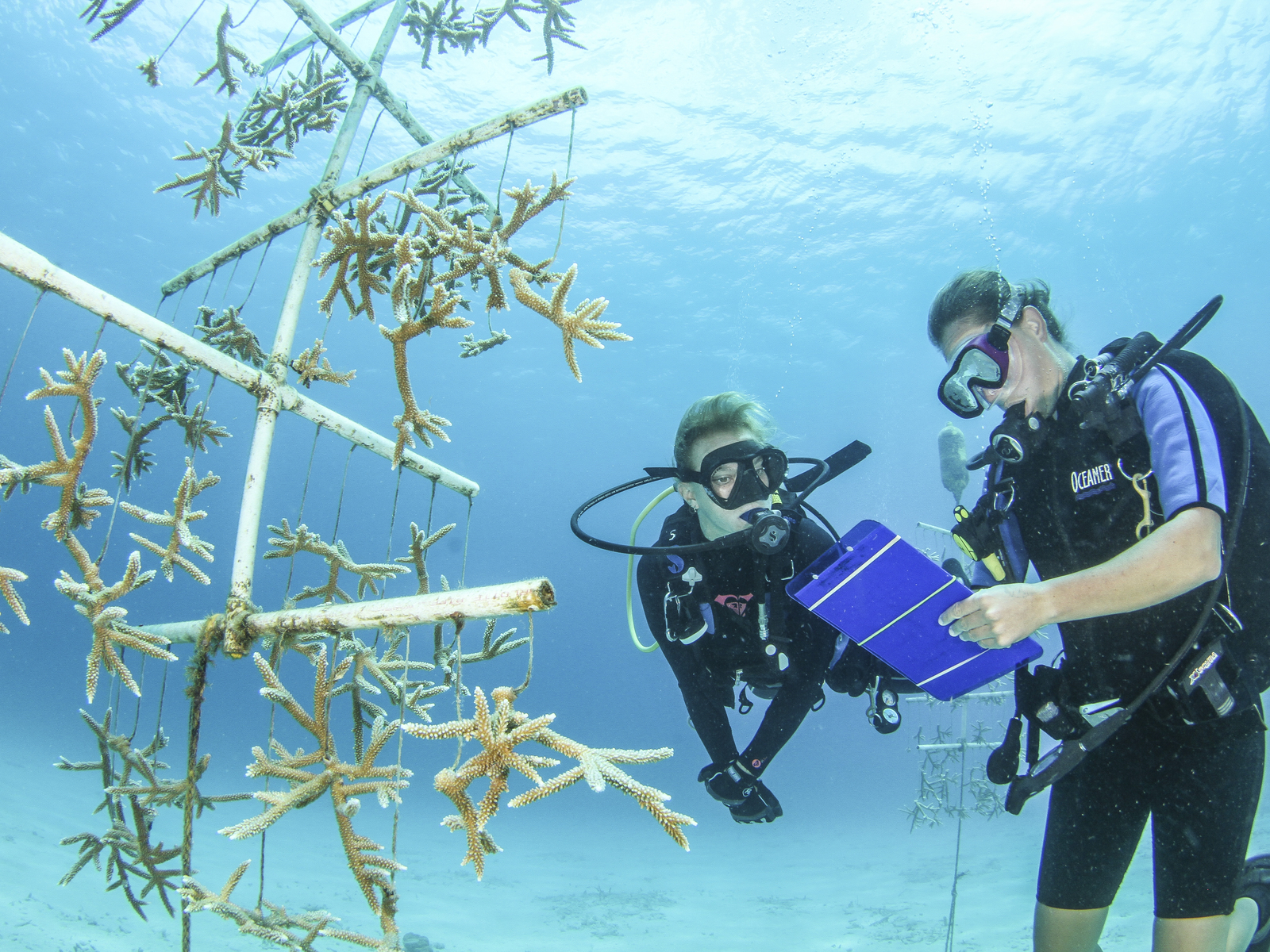
In response, in 2020 the Network—working closely with NOAA’s Coral Reef Conservation Program (CRCP), the U.S. Environmental Protection Agency (EPA), the AIC and other partners— designed and launched A Manager’s Guide to Coral Reef Restoration Planning and Design. The Guide addressed a pressing need, providing reef managers with a practical, step‑by‑step framework to move from planning to action, whether initiating a new restoration program or strengthening an existing one.
Built around a six‑step, adaptive planning process, the Guide supports jurisdictions in developing actionable, locally driven Restoration Action Plans. A defining feature of this approach is the intentional integration of climate change adaptation into every stage of restoration planning and design—helping managers make forward‑looking decisions that increase the long‑term success of restoration investments.
Since its release, the Guide has become a cornerstone of collaborative restoration planning. The Network and partners have successfully used it to convene managers, scientists, and community members in American Samoa, the Commonwealth of the Northern Mariana Islands, Guam, Puerto Rico, Hawaiʻi, and the U.S. Virgin Islands. These efforts have helped jurisdictions align priorities, build shared understanding, and translate science and community knowledge into clear, implementable restoration strategies.
The influence of this work extends well beyond U.S. waters. The planning framework has been adopted—and in some cases adapted—to support restoration efforts in Cuba, the Dominican Republic, Florida, French Polynesia, Haiti, Jamaica, Kenya, and Tanzania, demonstrating its flexibility and global relevance.
Together with AIC jurisdictions and NOAA CRCP, this work has strengthened restoration capacity, advanced climate‑smart decision‑making, and positioned coral reef restoration as a strategic tool for sustaining reef ecosystems and the communities that depend on them. Keep reading to learn how this planning framework has advanced restoration efforts in the Western Indian Ocean.
Strengthening Restoration Capacity in the WIO
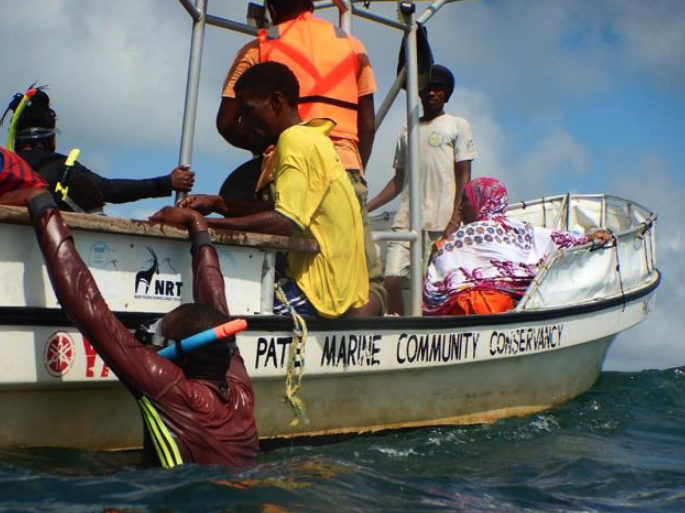
In Lamu, Kenya, more than 70% of the local communities depend on marine ecosystems. Coral reefs are particularly important, providing jobs linked to tourism activities and food and shelter for reef fish, octopus, and lobsters—which in turn provides food and income for Lamu’s people. On any given day, Kenya’s reefs are under siege, threatened by overfishing, damaging fishing practices, large-scale development, unsustainable tourism, coral mining, pollution, and warming seas due to climate change. In 1998, Kenya’s reefs took their biggest hit yet when warming waters caused a bleaching event that greatly compromised their health and integrity.
In light of this decline, reef managers—scientists, resource managers, and community leaders—are looking for new solutions to boost reef health and provide food and alternative livelihood options for local communities. The Reef Resilience Network and The Nature Conservancy Africa Program are working together to train local communities how to restore reefs which will support fisheries and community livelihoods.
A cohort of regional restoration practitioners was trained in reef restoration planning and best practices via a two-month mentored online course. Using A Manager’s Guide to Coral Reef Restoration Planning and Design, course participants developed a plan to restore half a hectare of reef within a locally managed marine area at Pate Marine Community Conservancy in Lamu. The project design incorporated low-cost and low-tech restoration methods to improve local fish populations, including the lobster fishery.
Following the online training, the cohort hosted a field-based workshop to engage stakeholders within the local fishing community in restoration practices. With hands-on support from the cohort, community members in Lamu began in-water work in January 2021 to build coral nurseries and artificial reef. The concrete structures will provide a surface for growing corals and also provide important habitat for fish and lobster; habitat that is largely absent from the degraded reef. As work on the community-based restoration project in Lamu continues, TNC Africa will provide on-going support to the cohort ensuring community participation and impactful implementation.
A similar process was implemented in Tanzania in 2021 and again in Kenya in 2024. In total, the Network and TNC Africa, along with many local partners, have designed and hosted three online mentored courses paired with three in-person trainings and field advising on restoration planning for managers, scientists, and community practitioners. Trainings have enhanced knowledge and skills in reef restoration best practices resulting in four reef restoration projects and more than 1,000 hectares of restored reef, meeting community needs while addressing biodiversity benefits and climate change impacts.
To accelerate best practices to scale and make restoration efforts more effective, the Network and TNC Africa supported local partners to launch the WIO Coral Reef Restoration Network in 2024. This network is facilitating regional partnerships, learning, and sharing opportunities for restoration practitioners across the WIO.