Where We Work
Puerto Rico’s coastline is home to more than 1,930 square miles of shallow coral reef ecosystems, including mangrove forests and seagrass beds. These habitats support more than 677 species of fish and 237 species of coral. However, over 93 percent of Puerto Rico’s coral reefs are threatened by sedimentation, algal growth, overfishing, bleaching and climate change.
Our Approach
Coral reef conservation efforts in Puerto Rico foster collaboration and science-based decision-making among stakeholders at the federal, regional, and local levels to ensure ocean habitats are protected for the benefit of people and nature. Effective management of marine and coastal protected areas is achieved through policy analysis, and support of cooperative management efforts with local communities and stakeholders.
Our Accomplishments
Our work has directly benefited approximately 423 square miles of coral reef habitat. Partnership efforts have engaged 1,117 people in training workshops and learning exchanges, and provided 21 sites with technical support.
- Completed the Puerto Rico Coral Reef Restoration Action Plan 2025–2035, a first-of-its-kind 10-year roadmap developed with DNER, NOAA, and 27 technical advisors representing government, universities, NGOs, and the private sector. The plan identifies priority restoration areas using a Biological Condition Gradient framework and defines objectives, interventions, and monitoring metrics across Puerto Rico's reef systems
- Launched a sustainable finance capacity-building training for marine protected area management collaborators in Puerto Rico, delivering three workshops to seven conservation organizations, supporting each with a customized financing roadmap, and providing individual consulting to five organizations on crowdfunding, educational tourism revenue, composting enterprise development, and/or marketing strategies. All materials made freely available in Spanish at reefresilience.org.
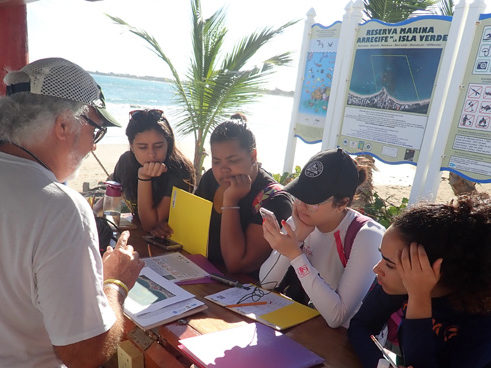
- Hosted nine training events for DNER Rangers Corps members on marine fisheries identification, climate change impacts, coral ecology, coral regulation, and vessel grounding response—including an interpretive snorkel on a live reef and hands-on field response simulation. Pre/post-testing confirmed measurable knowledge gains by the majority of participating DNER Rangers.
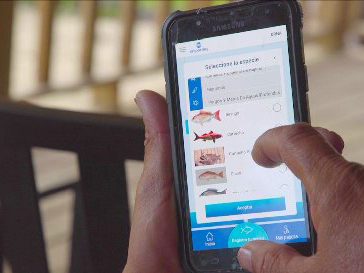
- Developed the first prototype for an electronic reporting application specific to Puerto Rico. This technology supports more informed, timely and effective management decisions for reef fisheries.
- DNER officially adopted the electronic Reporting System (eReporting), and more than 700 commercials fishers are registered on it. The Secretary of DNER signed an administrative order to formally adopt the eReporting mobile app as one of the official ways that the commercial fishers can report the fisher’s daily catch required by local and federal regulations.
- Supported training of fishers in responsible fishing practices, including regulations, license and permit requirements, through the development of the Commercial Fishers Education Program Guiding Document.
- Developed human-use maps and GIS geodatabase for Culebra Island to identify human stressors to coral reefs. The spatial information developed supports integrated coastal zone management efforts.
- Puerto Rico joined the Caribbean Challenge Initiative (CCI) by committing to conserve at least 20% of nearshore marine environments as national marine protected areas by 2020 and create a National Conservation Trust Fund. TNC staff advised the Puerto Rican CCI delegation, provided technical support to draft the Puerto Rico Declaration, participated in key meetings leading to a summit, and hosted the first ministerial CCI meeting.
- Provided technical support to develop the first document to assess Puerto Rico’s vulnerability to climate change (“Puerto Rico State of the Climate Report”). Based on this report, the governor of Puerto Rico issued five executive orders which mandate all public agencies to create climate adaptation plans for public infrastructure.
- More than ten restaurants joined us in the Reef Responsible Initiative to raise awareness about the vital role restaurants, consumers, and fishers can play in the fight to save coral reefs by choosing sustainable seafood. This initiative is a collaborative effort with DNER, Caribbean Fishery Management Council, and Sea Grant Program.
- The Arrecifes Isla Verde Nature Reserve completed four years of a successful community water quality program. As part of our commitment to marine protected areas, we provided seed funding to support the implementation of best management practices leading by organizations with an active co-manage with DNER. The CCI, DNER, TNC, and CBF completed the Puerto Rico Conservation Fund Sensitization Workshop to provide key stakeholders with an overview of conservation trust funds generally (history, purposes, benefits, among other things) and the Caribbean Challenge Initiative/Caribbean Biodiversity Fund, specifically; and to identify next steps to the establishment and capitalization of a fund in Puerto Rico. More than a dozen local and federal partners expressed their support for developing the new entity that will allocate resources to support the conservation of marine protected areas in Puerto Rico. The bylaws for the new entity were completed, and steps were taken to incorporate it under the laws of the Puerto Rico government.

The electronic reporting application benefits commercial fishers by providing them with personal records of their catch and making it easier to enter and send their data using their phones, tablet, or computer.